

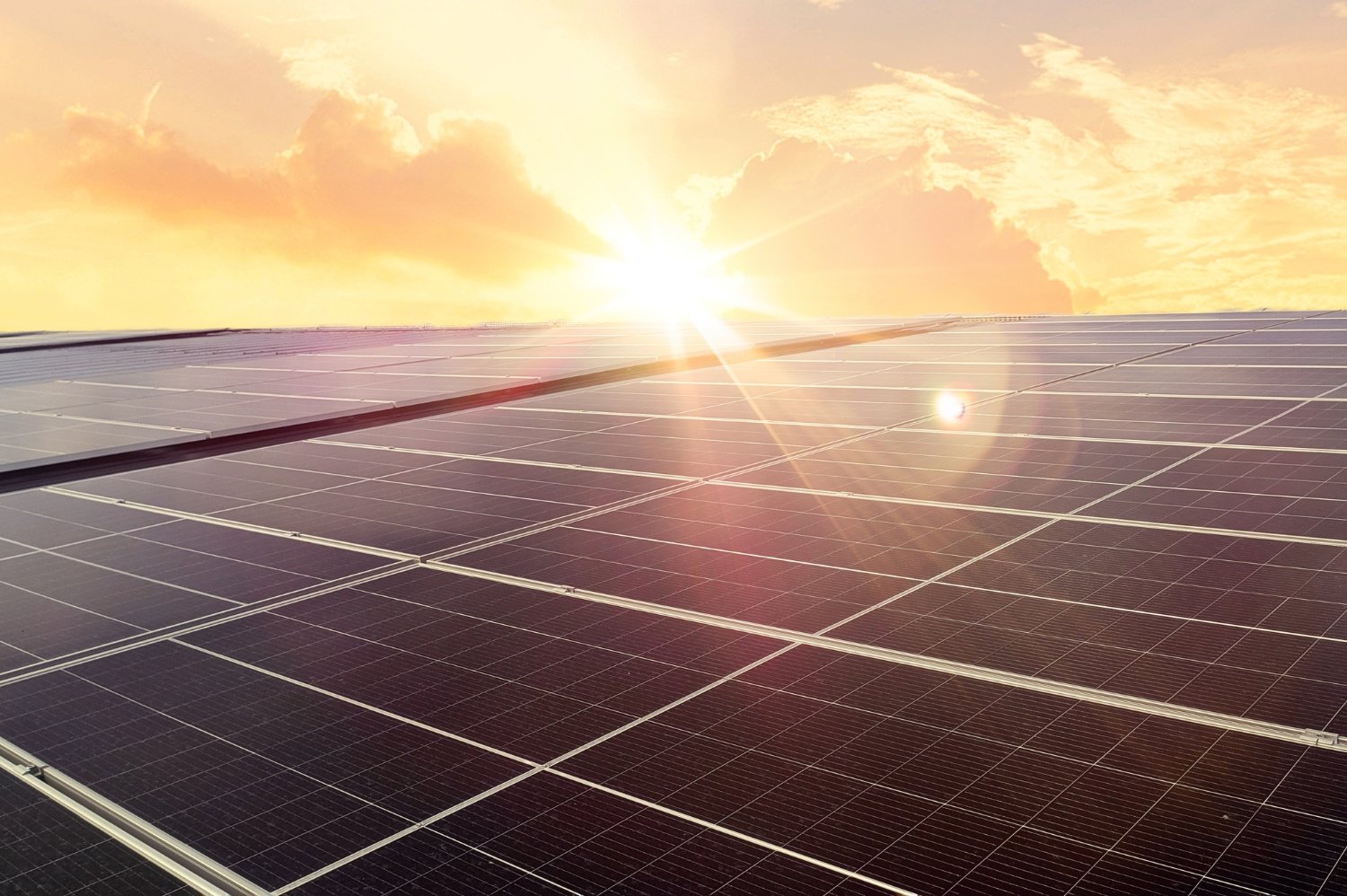
The global solar industry is constantly evolving, driven by one critical objective: higher efficiency with lower long-term degradation. As India accelerates its renewable energy targets and solar adoption expands across residential, commercial, and utility-scale projects, technological innovation in solar panels becomes increasingly important.
One of the most talked-about advancements today is N-Type TOPCon Solar Panels. With higher efficiency, improved temperature performance, and lower degradation rates compared to traditional P-Type modules, N-Type TOPCon Solar Cells are being seen as the next major leap in solar panel efficiency.
But what exactly is TOPCon technology? And is it truly the next efficiency breakthrough for India’s solar technology landscape?
Let’s explore.
Understanding the Basics: P-Type vs N-Type Solar Cells
Before understanding N-Type TOPCon Solar Panels, it’s important to revisit how solar panels are structured.
Traditional solar panels commonly use P-Type solar cells, which are manufactured using boron-doped silicon wafers. These have dominated the industry for decades due to cost efficiency and manufacturing maturity.
However, P-Type cells face certain limitations:
- Higher degradation rates
- Susceptibility to Light-Induced Degradation (LID)
- Slightly lower efficiency ceiling
- Greater sensitivity to impurities
In contrast, N-Type Solar Cells are manufactured using phosphorus-doped silicon wafers. They offer:
- Lower degradation
- Higher carrier lifetime
- Improved long-term performance
- Better resistance to LID
This fundamental difference makes N-Type Solar Cells more suitable for high efficiency solar panels.
What Are N-Type TOPCon Solar Cells?
TOPCon stands for Tunnel Oxide Passivated Contact.
In simple terms, TOPCon Solar Cells introduce an ultra-thin oxide layer and a doped polysilicon layer at the rear of the cell. This structure significantly reduces recombination losses, which are one of the primary efficiency barriers in conventional solar panels.
Key Structural Advantages of TOPCon Solar Cells:
- Enhanced surface passivation
- Reduced electron recombination
- Improved charge carrier transport
- Higher open-circuit voltage (Voc)
By minimizing internal losses, N-Type TOPCon Solar Panels achieve higher energy conversion efficiency compared to standard PERC modules.
How N-Type TOPCon Solar Panels Improve Solar Panel Efficiency
Solar panel efficiency depends on how effectively sunlight is converted into usable electricity. The better the electron flow and the lower the recombination losses, the higher the efficiency.
N-Type TOPCon Solar Panels improve solar panel efficiency in several ways:
1. Higher Conversion Efficiency
TOPCon technology enables efficiency levels that can exceed 22–23% in commercial modules, with potential for further improvement.
This makes high efficiency solar panels more viable for space-constrained installations.
2. Lower Degradation Rates
N-Type Solar Cells experience:
- Minimal Light-Induced Degradation (LID)
- Reduced Potential-Induced Degradation (PID)
This results in better long-term energy yield over 25+ years.
3. Better Temperature Coefficient
India’s climate often includes high ambient temperatures. Solar panels lose efficiency as temperature rises.
N-Type TOPCon Solar Panels generally offer a better temperature coefficient, meaning they retain performance better under heat—making them ideal for Solar Technology India applications.
Why India Needs High Efficiency Solar Panels
India’s solar growth is influenced by several factors:
- Limited rooftop space in urban areas
- Increasing commercial power demand
- Expanding industrial installations
- Large-scale ground-mounted solar projects
In such conditions, high efficiency solar panels allow:
- More power generation per square meter
- Improved ROI for commercial projects
- Higher output from limited installation area
- Faster payback periods
N-Type TOPCon Solar Panels directly address these challenges.
Performance in Indian Climatic Conditions
Solar Technology India must withstand:
- High temperatures (40°C+)
- Dust accumulation
- High UV exposure
- Humidity variations
- Monsoon conditions
Heat Performance
Thanks to improved temperature coefficients, N-Type Solar Cells maintain better output during peak summer months compared to traditional modules.
Low-Light Performance
TOPCon Solar Cells also perform better in:
- Cloudy conditions
- Early morning and late evening sunlight
- Diffused irradiance environments
This improves overall annual energy yield.
Comparing TOPCon Solar Cells with PERC Technology
PERC (Passivated Emitter and Rear Contact) has been the dominant solar cell architecture for years. However, it is approaching its theoretical efficiency limit.
| Feature | PERC Solar Panels | N-Type TOPCon Solar Panels |
|---|---|---|
| Efficiency | ~20–21% | 22–23%+ |
| Degradation | Higher | Lower |
| LID Resistance | Moderate | High |
| Temperature Performance | Standard | Improved |
| Long-Term Yield | Good | Superior |
As solar panel efficiency becomes a competitive differentiator, TOPCon Solar Cells are positioned as a natural successor to PERC technology.
Utility-Scale and Commercial Benefits
For utility-scale projects in India:
- Even a 1% efficiency increase can significantly improve project economics.
- Higher output reduces levelized cost of electricity (LCOE).
- Land utilization becomes more efficient.
For commercial rooftop installations:
- Limited roof area can generate higher capacity.
- Reduced structural load due to fewer modules required.
- Faster capital recovery.
These benefits make N-Type TOPCon Solar Panels attractive for large-scale adoption.
Long-Term Reliability and Energy Yield
One of the strongest advantages of N-Type Solar Cells is lower annual degradation.
While conventional modules may degrade at 0.5–0.7% annually, TOPCon modules often demonstrate lower degradation rates, ensuring better energy yield over 25–30 years.
Higher long-term yield means:
- Better project bankability
- Improved investor confidence
- Stronger financial returns
In Solar Technology India, where financing plays a major role, durability and reliability are critical.
Are N-Type TOPCon Solar Panels More Expensive?
Advanced solar panel efficiency typically comes with higher initial costs.
However, when evaluating:
- Lifetime energy production
- Reduced degradation
- Improved temperature performance
- Lower long-term maintenance risk
The overall lifecycle value often offsets the initial price difference.
As manufacturing scales up globally, cost differences are also narrowing.
The Future of Solar Technology India
India aims to significantly expand renewable capacity in the coming years. With strong policy support, domestic manufacturing growth, and rising demand for high efficiency solar panels, next-generation technologies like TOPCon are expected to gain rapid adoption.
Key trends supporting this shift include:
- Increased domestic cell manufacturing
- Focus on high-performance modules
- Push for global competitiveness
- Emphasis on quality and longevity
N-Type TOPCon Solar Panels align well with these industry goals.
Challenges in Adoption
While promising, the transition to N-Type Solar Cells involves:
- Manufacturing upgrades
- Process precision requirements
- Skilled workforce training
- Quality control advancements
As infrastructure improves, these challenges are gradually being addressed.
Is TOPCon the Final Evolution?
Solar technology continues to evolve. Other technologies like HJT (Heterojunction) and tandem cells are also emerging.
However, N-Type TOPCon Solar Cells currently offer:
- A practical upgrade from PERC
- Strong balance between cost and efficiency
- Scalable manufacturing feasibility
- Immediate performance advantages
This positions TOPCon as one of the most viable near-term efficiency leaps in solar panel technology.
Conclusion: A Defining Moment for Solar Panel Efficiency in India
The rise of N-Type TOPCon Solar Panels represents more than just incremental improvement—it signals a meaningful shift toward higher efficiency, lower degradation, and climate-resilient performance.
For India, where solar installations must operate under intense heat and varied environmental conditions, TOPCon Solar Cells offer:
- Superior energy yield
- Enhanced reliability
- Better long-term financial performance
- Greater power output from limited space
As Solar Technology India continues to mature, high efficiency solar panels like N-Type TOPCon are likely to play a central role in shaping the next phase of renewable energy growth.