
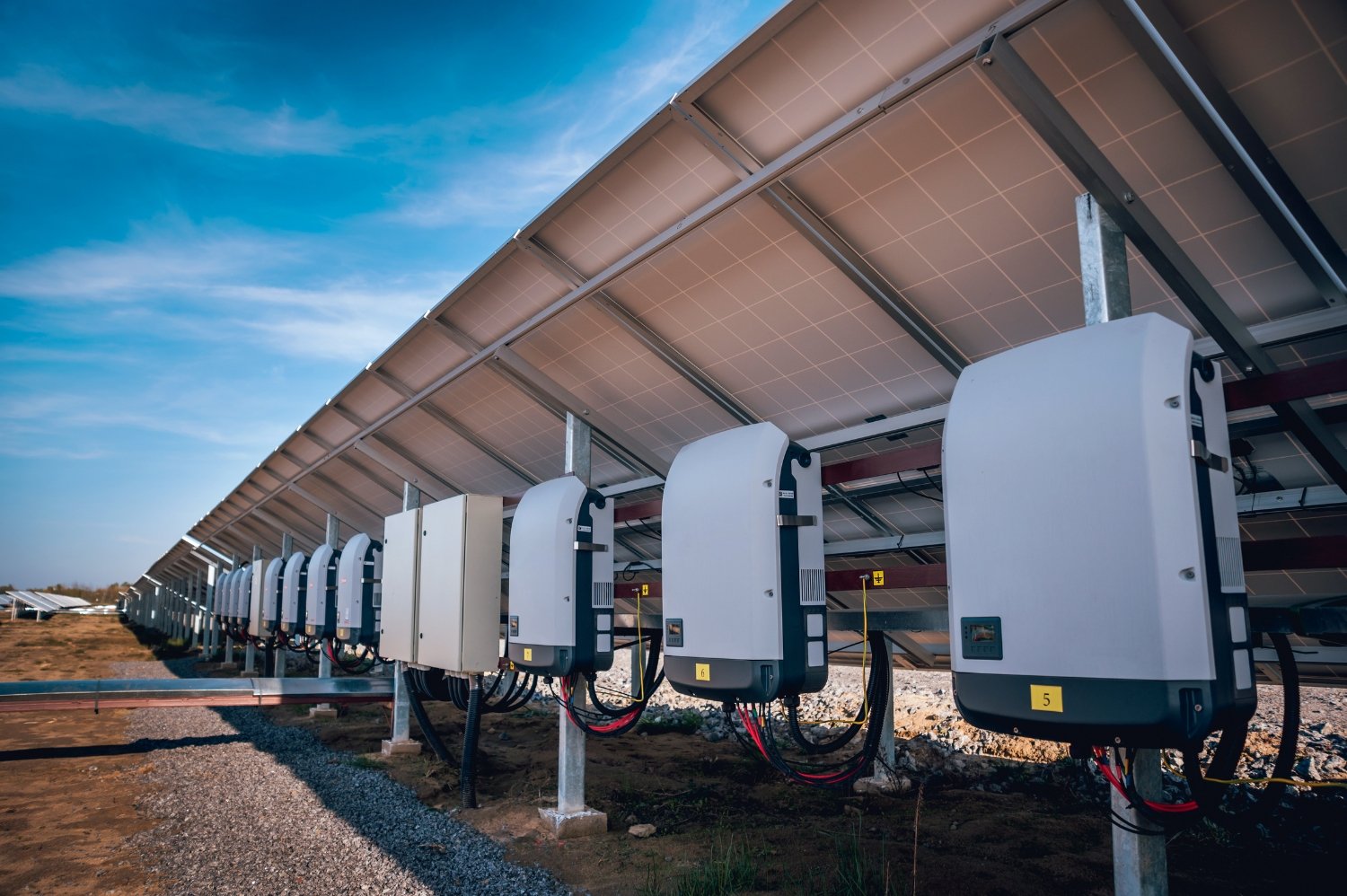
Designing a high-performance solar system is not just about installing premium solar panels or selecting a powerful solar inverter. The real efficiency of a solar installation depends on how precisely the inverter sizing aligns with the solar panel array.
Improper inverter sizing can lead to energy losses, voltage mismatches, thermal stress, and reduced system lifespan. On the other hand, a properly sized solar inverter ensures optimal conversion efficiency, grid stability, and long-term reliability.
This technical guide breaks down the inverter sizing puzzle—helping you understand how to correctly match a solar inverter with your solar panels for maximum performance and return on investment.
Understanding the Role of a Solar Inverter in Solar System Design
A solar inverter is the heart of any solar system design. While solar panels generate DC (Direct Current) electricity, homes and industries operate on AC (Alternating Current). The inverter converts DC to AC while also:
- Regulating voltage
- Managing grid synchronization
- Tracking maximum power point (MPPT)
- Protecting against overload and faults
Because the solar inverter controls how efficiently DC energy becomes usable AC power, inverter sizing plays a critical role in total system output.
What is Inverter Sizing?
Inverter sizing refers to selecting the correct inverter capacity (in kW) relative to the total installed capacity of solar panels (in kWp).
For example:
- 10 kWp solar panels
- 8 kW or 10 kW solar inverter?
This decision depends on technical parameters such as:
- DC AC Ratio Voltage window
- Maximum Power Point Tracking (MPPT) range
- Environmental conditions
- Grid compliance standards
Choosing incorrectly can lead to clipping losses or underutilized capacity.
The DC AC Ratio: The Core of Inverter Sizing
The DC AC ratio is one of the most important factors in inverter sizing.
DC AC Ratio = Total DC Capacity of Solar Panels ÷ Inverter AC Capacity
For example:
- 12 kWp solar panels 10 kW solar inverter
- DC AC Ratio = 1.2
Why Oversizing Panels is Common
In most solar system design projects, the DC AC ratio ranges from 1.1 to 1.3.
This is done because:
- Solar panels rarely operate at peak capacity continuously.
- Temperature losses reduce actual output.
- Irradiance varies throughout the day.
A slightly higher DC AC ratio ensures the solar inverter operates closer to optimal efficiency for most of the day.
What Happens If the Solar Inverter is Undersized?
An undersized solar inverter means the inverter capacity is too small relative to solar panels.
Consequences:
- Power clipping during peak sunlight hours
- Increased thermal stress
- Reduced long-term efficiency
- Lower total energy harvest
Clipping occurs when solar panels generate more power than the inverter can handle, forcing the inverter to cap output.
What Happens If the Solar Inverter is Oversized?
An oversized solar inverter means inverter capacity exceeds solar panel output.
Consequences:
- Higher initial investment
- Lower efficiency at partial loads
- Underutilized inverter capacity
- Reduced ROI
Solar inverters perform best within a certain loading window (usually 30–80%). An oversized inverter may rarely operate in its peak efficiency zone.
Voltage Matching: A Critical Step in Solar System Design
Proper inverter sizing is not only about kW capacity—it also involves voltage compatibility.
Key voltage parameters include:
- Maximum DC input voltage
- MPPT voltage range
- Minimum startup voltage
- Open Circuit Voltage (Voc) of solar panels
If the solar panels’ string voltage exceeds inverter limits, it can damage the inverter. If voltage is too low, the inverter may not start efficiently.
String Configuration and String Inverter Selection
When using a string inverter, proper string design becomes essential.
Key Considerations:
- Number of panels per string
- Panel Voc at lowest temperature
- MPPT channel capacity
- Current limits per MPPT
Incorrect string design can cause:
- Voltage mismatch
- Uneven load distribution
- MPPT inefficiencies
- Reduced energy output
Each string inverter must be matched to ensure optimal MPPT tracking across all panel strings.
Temperature Impact on Inverter Sizing
Solar panels behave differently under varying temperatures.
- High temperature → Reduced voltage
- Low temperature → Increased voltage
During winter mornings, panel voltage may spike significantly. If inverter sizing does not account for this, the inverter may experience overvoltage conditions.
Therefore, inverter sizing must consider:
- Minimum site temperature
- Maximum irradiance
- Temperature coefficient of panels
Residential vs Commercial Solar Inverter Sizing
Residential Solar Systems
In residential solar system design:
- DC AC ratio typically between 1.1–1.2
- Limited roof space
- Single or multiple MPPT string inverter
- Focus on energy self-consumption
Commercial & Industrial Solar Systems
In commercial installations:
- Larger DC AC ratio flexibility
- Multiple string inverter setups
- Load profiling analysis
- Grid export regulations consideration
Commercial solar inverter sizing often requires load demand analysis and future expansion planning.
Central Inverter vs String Inverter: Sizing Differences
While this guide focuses on string inverter applications, large projects sometimes use central inverters.
String Inverter Advantages:
- Better for modular installations
- Easier maintenance
- Flexible string design
- Reduced mismatch losses
String inverter sizing is generally more adaptable for distributed rooftops and segmented installations.
Efficiency Curves and Partial Load Performance
Every solar inverter has an efficiency curve.
Peak efficiency usually occurs between:
- 40%–80% load
Proper inverter sizing ensures that daily operation falls within this optimal window for most sunlight hours.
Ignoring efficiency curves in solar system design can reduce long-term system performance.
Grid Compliance and Inverter Sizing
Modern solar inverter systems must comply with:
- Grid voltage limits
- Frequency control
- Anti-islanding protection
- Harmonic distortion norms
Improper inverter sizing may cause grid instability, especially in high-density solar zones.
Therefore, inverter sizing should also align with local grid standards and regulatory frameworks.
Future Expansion Considerations in Solar System Design
Many system owners plan to:
- Add more solar panels
- Increase load demand
- Integrate battery storage
Choosing a solar inverter with slight headroom can help accommodate future expansion without replacing major equipment.
However, oversizing must still remain within practical DC AC ratio limits.
Common Inverter Sizing Mistakes to Avoid
- Matching inverter capacity exactly to panel capacity (1:1 without analysis)
- Ignoring DC AC ratio optimization
- Not calculating temperature-corrected Voc
- Poor string configuration
- Ignoring inverter efficiency curves
- Overlooking MPPT input limitations
- Ignoring site-specific irradiance conditions
Step-by-Step Approach to Correct Inverter Sizing
Step 1: Calculate Total Solar Panel Capacity (kWp)
Add all installed solar panels.
Step 2: Determine Optimal DC AC Ratio
Select between 1.1 to 1.3 depending on climate and usage.
Step 3: Check Voltage Compatibility
Ensure string voltage falls within inverter MPPT range.
Step 4: Review Efficiency Curve
Ensure inverter operates in optimal efficiency window.
Step 5: Validate Grid Compliance
Confirm regulatory alignment.
Why Proper Solar Inverter Sizing Maximizes ROI
Correct inverter sizing ensures:
- Maximum energy harvest
- Reduced energy clipping
- Higher system efficiency
- Longer equipment lifespan
- Better return on investment
Since the solar inverter manages the entire power conversion process, its technical compatibility with solar panels directly impacts long-term performance.
Conclusion: Solving the Inverter Sizing Puzzle
The inverter sizing puzzle is not just about numbers—it is about engineering precision.
Matching a solar inverter with the correct solar panels requires careful evaluation of:
- DC AC ratio
- Voltage compatibility
- String design
- Temperature behavior
- Efficiency curves
- Future expansion plans
A well-designed solar system ensures that every unit of sunlight captured by solar panels is efficiently converted and delivered without compromise.
Proper inverter sizing transforms a basic installation into a high-performance, future-ready solar solution.